

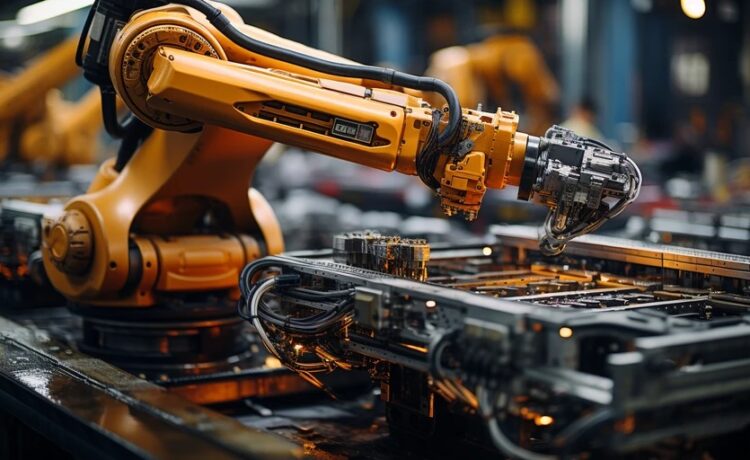
The industry sector forms the backbone of economic development across the world. From producing everyday consumer goods to enabling technological breakthroughs, industry connects raw resources, labor, innovation, and markets into a single productive system. Its influence reaches employment, trade, infrastructure, and even national competitiveness.
Understanding industry is essential for businesses, policymakers, students, and anyone curious about how economies function and grow.
What Is Industry?
Industry refers to economic activities involved in the production of goods or services within an economy. It sits between raw material extraction and end consumers, transforming inputs into usable products or delivering value-based services.
At its core, industry focuses on:
-
Value creation
-
Efficiency and scale
-
Standardization and quality
-
Meeting market demand
Industries may operate locally, nationally, or globally, depending on resources, technology, and demand.
Historical Evolution of Industry
The concept of industry has evolved significantly over time, shaped by technological and social change.
Pre-Industrial Era
-
Dominated by manual labor and craftsmanship
-
Small-scale production
-
Limited mechanization
Industrial Revolution
-
Introduction of machines and factories
-
Shift from agrarian economies to industrial ones
-
Rapid urbanization and job specialization
Modern Industrial Era
-
Automation and digitization
-
Global supply chains
-
Emphasis on innovation, sustainability, and efficiency
Each phase expanded production capacity and redefined how people work and live.
Major Types of Industry
Industries are commonly classified based on the nature of their activities.
Primary Industry
Focuses on extracting natural resources directly from the Earth.
-
Agriculture
-
Fishing
-
Mining
-
Forestry
Secondary Industry
Involves manufacturing and processing raw materials into finished or semi-finished goods.
-
Automobile manufacturing
-
Steel production
-
Food processing
-
Textile factories
Tertiary Industry
Provides services rather than tangible goods.
-
Transportation
-
Banking and finance
-
Healthcare
-
Retail and hospitality
Quaternary Industry
Centers on knowledge-based services.
-
Information technology
-
Research and development
-
Education
-
Data and analytics services
Quinary Industry
Focuses on human-centered services.
-
Social services
-
Healthcare support
-
Community development
-
Public welfare services
Importance of Industry in Economic Development
Industry plays a vital role in shaping both developed and developing economies.
Key contributions include:
-
Employment generation across skill levels
-
Higher productivity through specialization
-
Export growth and foreign exchange earnings
-
Infrastructure development
-
Technological advancement
A strong industrial base often correlates with higher standards of living and economic stability.
Industry and Technological Innovation
Modern industries rely heavily on technology to remain competitive.
Current trends include:
-
Automation and robotics
-
Artificial intelligence and data-driven decision-making
-
Smart factories and connected machinery
-
Advanced materials and precision engineering
Technology reduces costs, improves quality, and enables faster response to market changes.
Sustainability and the Future of Industry
Industrial growth now comes with greater responsibility toward the environment and society.
Key sustainability priorities:
-
Reducing carbon emissions
-
Efficient use of energy and resources
-
Ethical labor practices
-
Waste reduction and recycling
-
Adoption of renewable energy sources
Future industries are expected to balance profitability with environmental and social accountability.
Challenges Facing Modern Industries
Despite progress, industries face ongoing challenges.
Common issues include:
-
Rising raw material costs
-
Skilled labor shortages
-
Regulatory compliance
-
Supply chain disruptions
-
Cybersecurity risks in digital systems
Addressing these challenges requires innovation, adaptability, and strategic planning.
FAQs
What is the difference between industry and business?
Industry refers to a group of companies producing similar goods or services, while a business is a single organization operating within an industry.
Why is industry important for a country’s economy?
Industry drives employment, exports, infrastructure development, and technological progress, contributing significantly to economic growth.
How does industry differ from the service sector?
Industry focuses on producing goods, whereas the service sector provides intangible services like healthcare, education, and finance.
What role does technology play in modern industry?
Technology improves efficiency, reduces costs, enhances quality, and enables automation and innovation in industrial processes.
Can small industries compete with large industries?
Yes, small industries can compete through niche markets, customization, innovation, and agility.
How does industry impact the environment?
Industrial activities can affect air, water, and land, but sustainable practices and clean technologies help reduce environmental impact.
What skills are most important for working in industry?
Technical skills, problem-solving, adaptability, digital literacy, and safety awareness are increasingly important in modern industries.
