

Introduction to Industry
The concept of industry represents the backbone of any economy. It refers to the organised production of goods, services, or raw materials, and is often grouped into major categories such as primary, secondary, tertiary, and quaternary sectors. Each of these sectors plays a distinct role in shaping societies, driving growth, and influencing global trade. Industry is not only about factories and machines, but also about people, innovation, and the systems that connect them.
In today’s global landscape, industry reflects both tradition and modernity. While agriculture and mining form the earliest pillars of industry, advanced technology and digital innovation have become key forces in transforming how businesses operate. Understanding the evolution, challenges, and future direction of industry is essential for professionals, policymakers, and communities alike.
Historical Development of Industry
The origins of industry can be traced back to pre-industrial economies, where small-scale agriculture and handicrafts dominated. The Industrial Revolution marked a turning point, bringing machinery, steam power, and mass production into daily life. This period not only redefined production but also reshaped social structures, migration patterns, and global trade.
By the 20th century, industries had expanded across energy, automotive, textiles, steel, and chemicals, while service industries began to emerge strongly. Today, industries extend far beyond manufacturing, including areas such as finance, healthcare, technology, and creative sectors.
Key Phases of Industrial Growth
-
Pre-Industrial Era: Agriculture and manual crafts dominated economic life.
-
First Industrial Revolution: Steam engines, textile mills, and iron production transformed economies.
-
Second Industrial Revolution: Steel, electricity, and railways boosted manufacturing.
-
Digital and Information Era: Computers, automation, and the internet redefined industries.
Types of Industry
Industry can be classified into several categories based on the nature of activities:
Primary Industry
This includes extraction of raw materials such as farming, fishing, mining, and forestry. These industries provide the foundation for manufacturing and service sectors.
Secondary Industry
Secondary industries are responsible for turning raw materials into finished goods. This includes construction, engineering, and manufacturing sectors such as automobiles, textiles, and electronics.
Tertiary Industry
This refers to services rather than tangible products. Healthcare, education, transportation, banking, and retail fall under this category.
Quaternary and Quinary Industries
These represent advanced knowledge-based activities like research, innovation, and information technology. The quinary sector focuses on decision-making roles in government, top-level management, and policy.
Structure of Modern Industry
Modern industries are built upon complex structures that combine human talent, technological tools, supply chains, and market networks. Globalisation has encouraged industries to move beyond borders, making multinational collaboration a key feature of growth.
Key structural components include:
-
Supply Chains: Connecting raw material providers, manufacturers, distributors, and retailers.
-
Labour Force: Skilled and unskilled workers who drive operations.
-
Technology: Automation, artificial intelligence, and robotics streamline production.
-
Capital Investment: Funding from governments, investors, and institutions that support growth.
-
Regulation and Standards: Legal frameworks that ensure fair practices, safety, and sustainability.
Role of Technology in Industry
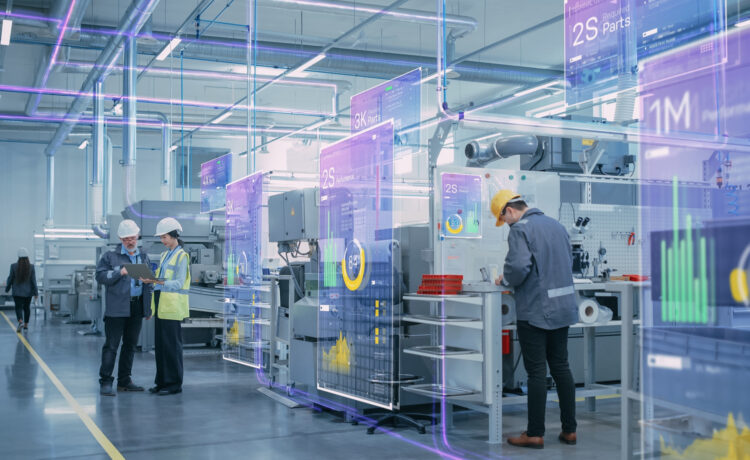
Technology has become the lifeblood of modern industry. Automation reduces manual effort, digital tools enhance decision-making, and advanced machinery increases efficiency. The rise of artificial intelligence, machine learning, and robotics has introduced new opportunities and challenges.
Examples include:
-
Smart Manufacturing: Using sensors and data analytics for predictive maintenance.
-
E-commerce Growth: Digital platforms reshaping retail and distribution.
-
Green Technology: Renewable energy and sustainable practices reducing environmental impact.
Globalisation and Industry
The globalisation of industry has created interdependent economies. Production may take place in one country, assembly in another, and sales in multiple markets. While this has improved efficiency and lowered costs, it has also raised concerns about labour conditions, environmental responsibility, and economic inequality.
Challenges Facing Industry
Despite its progress, industry faces several hurdles:
-
Sustainability: Rising pressure to adopt eco-friendly practices.
-
Automation and Job Loss: Machines replacing human roles in many sectors.
-
Global Competition: Intense competition across international markets.
-
Supply Chain Disruptions: Events such as pandemics and geopolitical tensions affecting production.
-
Energy Dependence: Rising costs and reliance on non-renewable energy sources.
Future of Industry
The future of industry is being shaped by sustainability, digitalisation, and global collaboration. Emerging fields such as biotechnology, renewable energy, and space technology are expected to redefine the scope of industries worldwide. Governments and organisations are also working towards inclusive growth, ensuring that technological benefits reach all levels of society.
Expected Trends
-
Greater reliance on renewable energy and eco-friendly materials.
-
Expansion of remote working models and digital platforms.
-
Growth in biotechnology and healthcare innovation.
-
Widening role of artificial intelligence and data-driven solutions.
Importance of Industry for Society
Industry provides employment, drives economic development, and contributes to cultural exchange. Beyond economics, industry shapes lifestyles, urban growth, and even education systems. It supports national stability and helps countries strengthen their global influence.
FAQs
What are the four main types of industry?
The four main types are primary (raw material extraction), secondary (manufacturing), tertiary (services), and quaternary (knowledge-based activities).
How has technology changed industry?
Technology has transformed industries through automation, artificial intelligence, advanced machinery, and digital platforms that enhance productivity and connectivity.
Why is sustainability important in industry?
Sustainability ensures that industries can operate without depleting resources or harming the environment, securing long-term economic and social wellbeing.
What role does industry play in employment?
Industry creates millions of jobs worldwide, ranging from unskilled labour in agriculture to high-level roles in research, management, and technology.
How does globalisation impact industry?
Globalisation fosters trade and cooperation but also introduces challenges such as outsourcing, economic inequality, and dependence on international supply chains.
What industries are expected to grow in the future?
Sectors like renewable energy, healthcare, biotechnology, digital services, and artificial intelligence are predicted to expand rapidly in the coming decades.